Stanford University
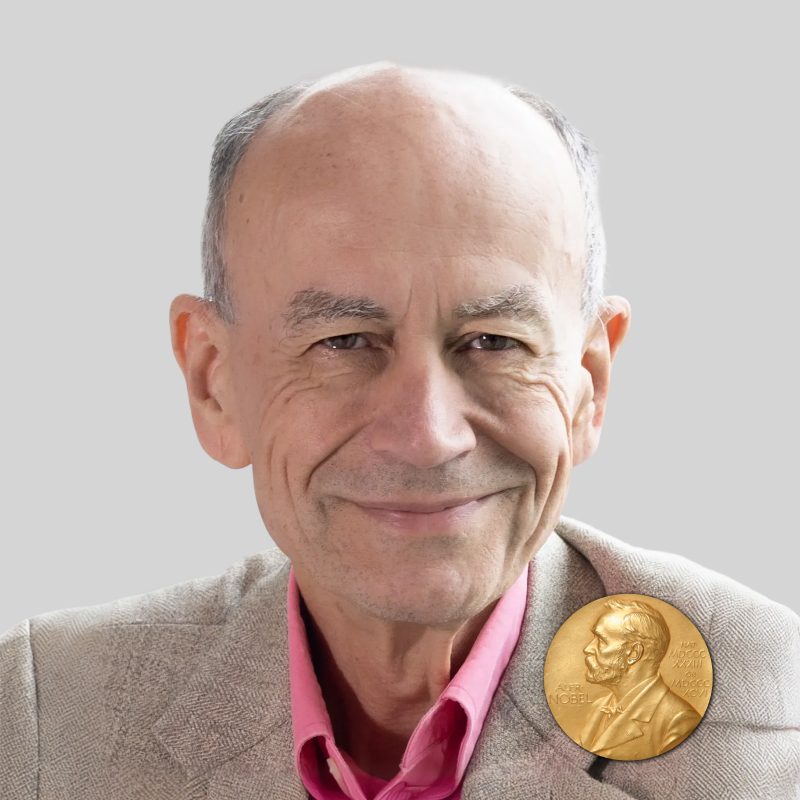
Thomas Christian Südhof is a neuroscientist whose work has described how neurons communicate with each other at synapses and how such communication becomes impaired in neurological diseases. He is known both for his earlier work that resulted in the discovery of how synapses release neurotransmitters and for his recent work revealing how neurons form specific synaptic connections that follow a tight molecular logic via engagement of trans-synaptic adhesion molecules. Südhof, a native of Göttingen, Germany, obtained his M.D. and doctoral degrees from the University of Göttingen. He performed his doctoral thesis work at the Max-Planck-Institut in Göttingen with Victor P. Whittaker on the biophysical structure of secretory granules. As a postdoctoral fellow with Mike Brown and Joe Goldstein at UT Southwestern in Dallas, Südhof then elucidated the structure, expression and cholesterol-dependent regulation of the LDL receptor gene. Upon starting his own laboratory at UT Southwestern in 1986, Südhof switched to neuroscience to study neurotransmitter release. In 2008, Südhof moved to Stanford University to become the Avram Goldstein Professor in the School of Medicine. Südhof’s research determined the molecular mechanisms enabling fast neurotransmitter release, which initiates synaptic transmission and is beginning to elucidate the atomic mechanisms underlying synapse specificity. Moreover, Südhof’s work has addressed how synaptic connections become impaired in brain disorders, in particular schizophrenia and Alzheimer’s disease. In recognition of his contributions, Südhof has shared in several awards, including the 2013 Lasker~DeBakey Medical Basic Research Award and the 2013 Nobel Prize in Physiology or Medicine.
Thomas Christian Südhof is a neuroscientist whose work has described how neurons communicate with each other at synapses and how such communication becomes impaired in neurological diseases. He is known both for his earlier work that resulted in the discovery of how synapses release neurotransmitters and for his recent work revealing how neurons form specific synaptic connections that follow a tight molecular logic via engagement of trans-synaptic adhesion molecules. Südhof, a native of Göttingen, Germany, obtained his M.D. and doctoral degrees from the University of Göttingen. He performed his doctoral thesis work at the Max-Planck-Institut in Göttingen with Victor P. Whittaker on the biophysical structure of secretory granules. As a postdoctoral fellow with Mike Brown and Joe Goldstein at UT Southwestern in Dallas, Südhof then elucidated the structure, expression and cholesterol-dependent regulation of the LDL receptor gene. Upon starting his own laboratory at UT Southwestern in 1986, Südhof switched to neuroscience to study neurotransmitter release. In 2008, Südhof moved to Stanford University to become the Avram Goldstein Professor in the School of Medicine. Südhof’s research determined the molecular mechanisms enabling fast neurotransmitter release, which initiates synaptic transmission and is beginning to elucidate the atomic mechanisms underlying synapse specificity. Moreover, Südhof’s work has addressed how synaptic connections become impaired in brain disorders, in particular schizophrenia and Alzheimer’s disease. In recognition of his contributions, Südhof has shared in several awards, including the 2013 Lasker~DeBakey Medical Basic Research Award and the 2013 Nobel Prize in Physiology or Medicine.